Tagetes erecta L. — The Source of Eyevistar®
Marigold flowers are the most abundant commercial botanical source of lutein and zeaxanthin, the two carotenoids that form macular pigment.
Intensely pigmented flower heads rich in xanthophylls
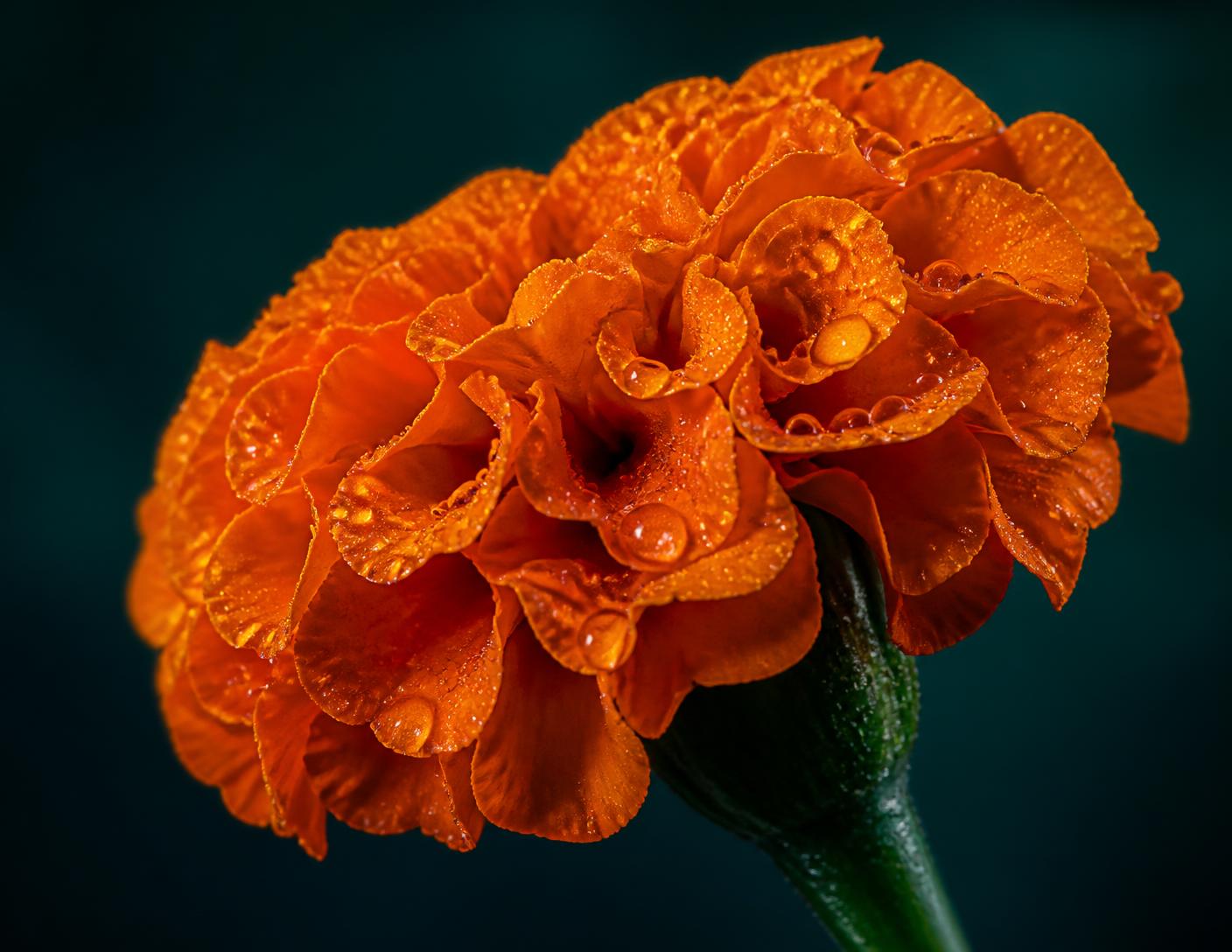
Tagetes erecta L., commonly known as marigold, is the botanical source of Eyevistar®. The plant is recognised for its intensely coloured flower heads, which range from golden yellow to deep orange and contain naturally occurring carotenoid pigments.
Marigold flowers are an important botanical source of lutein and zeaxanthin. These compounds belong to the xanthophyll class of carotenoids and are responsible, in part, for the characteristic colour of the flowers. Eyevistar® research identifies green leafy vegetables, maize and flowers such as Tagetes erecta L. as dietary sources of these carotenoids, and marigold flowers as the most abundant commercial botanical source of lutein and zeaxanthin.
Lutein and zeaxanthin cannot be synthesised naturally by the human body and must therefore be obtained through dietary or supplemental sources. After absorption, these carotenoids are transported through the bloodstream and selectively deposited in ocular tissues, particularly the macular region of the retina.
Flowers, where the carotenoids concentrate
Eyevistar® is derived from the flowers of Tagetes erecta L. The flower is the commercially important part of the plant for obtaining lutein and zeaxanthin-rich marigold extract.
In marigold flowers, lutein and zeaxanthin occur primarily in esterified forms. During digestion, these carotenoid esters are hydrolysed to release free lutein and related carotenoids, which can then be absorbed through the small intestine and transported in association with circulating lipoproteins.
The standardized composition — lutein 20% and zeaxanthin 4% — provides a defined concentration of the two carotenoids associated with macular pigment and retinal protection. Eyevistar® is manufactured and registered by Star Hi Herbs Pvt. Ltd. as a marigold-derived lutein and zeaxanthin formulation.
Botanical classification
| Classification | Details |
|---|---|
| Kingdom | Plantae |
| Family | Asteraceae |
| Genus | Tagetes |
| Species | erecta |
| Common name | Marigold |
| Plant part used | Flowers |
| Principal standardized carotenoids | Lutein and zeaxanthin |
| Eyevistar® standardization | Lutein 20% and zeaxanthin 4% |
From marigold flower to retinal carotenoids
Lutein and zeaxanthin selectively accumulate in the macular region, where they form an important part of the macular pigment. According to Eyevistar® research, these carotenoids support the retina through two complementary functions.
First, they help filter high-energy blue light before it reaches sensitive photoreceptor tissues. Second, they help neutralise reactive oxygen species associated with oxidative damage in retinal cells.
Eyevistar® converts the naturally occurring carotenoid value of marigold flowers into a standardized nutraceutical ingredient designed to deliver consistent lutein and zeaxanthin concentrations.
Discuss marigold sourcing and traceability with our team
Request verified sourcing information, specifications or a sample of Eyevistar® for evaluation.